If you're looking into NPORS training, one of the first questions you're likely to ask is: how long will it take?
The honest answer is that there isn't one fixed course length for every operator. NPORS training duration depends on the type of plant or machinery you're training on, your existing experience, the course route you need and the level of competence you need to demonstrate.
For someone completely new to operating plant, training can take several days because there is more to learn before the assessment. An experienced operator may need considerably less time because they already have practical knowledge of the machine and its operation.
At KOPLANT Construction Training, NPORS courses are available for a range of plant and machinery, with different training durations depending on the course and experience level. For example, novice Forward Tipping Dumper training is listed as three days, while novice 360 Excavator training below 10 tonnes is five days. Some experienced routes are listed as seven hours.
So, if you're trying to work out how long your own NPORS training course could take, here's what you need to know.
What Is NPORS Training?
NPORS stands for the National Plant Operators Registration Scheme. It provides training, testing and operator registration across a wide range of plant and machinery categories used in industries such as construction.
For construction workers, the NPORS/CSCS route can provide an operator card for demonstrating the appropriate training and competence for a particular category of plant. NPORS also offers a traditional operator card route for sectors and employers where the CSCS logo is not a requirement.
The training itself combines theoretical knowledge with practical skills. Depending on the machine, you may cover areas such as pre-start checks, machine controls, safe operating procedures, attachments, manoeuvring, loading and unloading, workplace hazards and end-of-shift procedures.
You will then need to demonstrate your knowledge and practical ability through the relevant assessment.
The important point is that NPORS training isn't simply about spending a set number of days sitting in a classroom. The aim is to develop and assess the skills needed to operate the relevant plant safely and competently.
So, How Long Does NPORS Training Take?
There isn't a universal NPORS course duration.
The time required can range from around one day for certain experienced-operator routes to several days for a novice course. More complex machinery may require a longer period of structured training.
KOPLANT's current course information provides a useful example of how much the duration can vary:
- Forward Tipping Dumper: 3 days for novice operators and 7 hours for experienced operators.
- 360 Excavator below 10 tonnes: 5 days for novice operators and 7 hours for experienced operators.
- 360 Excavator above 10 tonnes: 6–9 days for novice operators and 5 days for experienced operators.
- Telescopic Handler up to 9 metres: 5 days for novice operators and 3 days for experienced operators.
- Telescopic Handler above 9 metres: 5 days for novice operators and 7 hours for experienced operators.
- Slinger/Signaller: 2 days for novice operators and 7 hours for experienced operators.
These are KOPLANT's listed course durations, rather than a single standard that applies to every NPORS provider or every candidate. The machine category and candidate's previous experience make a significant difference.
How Long Does NPORS Training Take for Beginners?
If you've never operated the machine before, you'll generally need more training than someone who has been using the equipment on site for years.
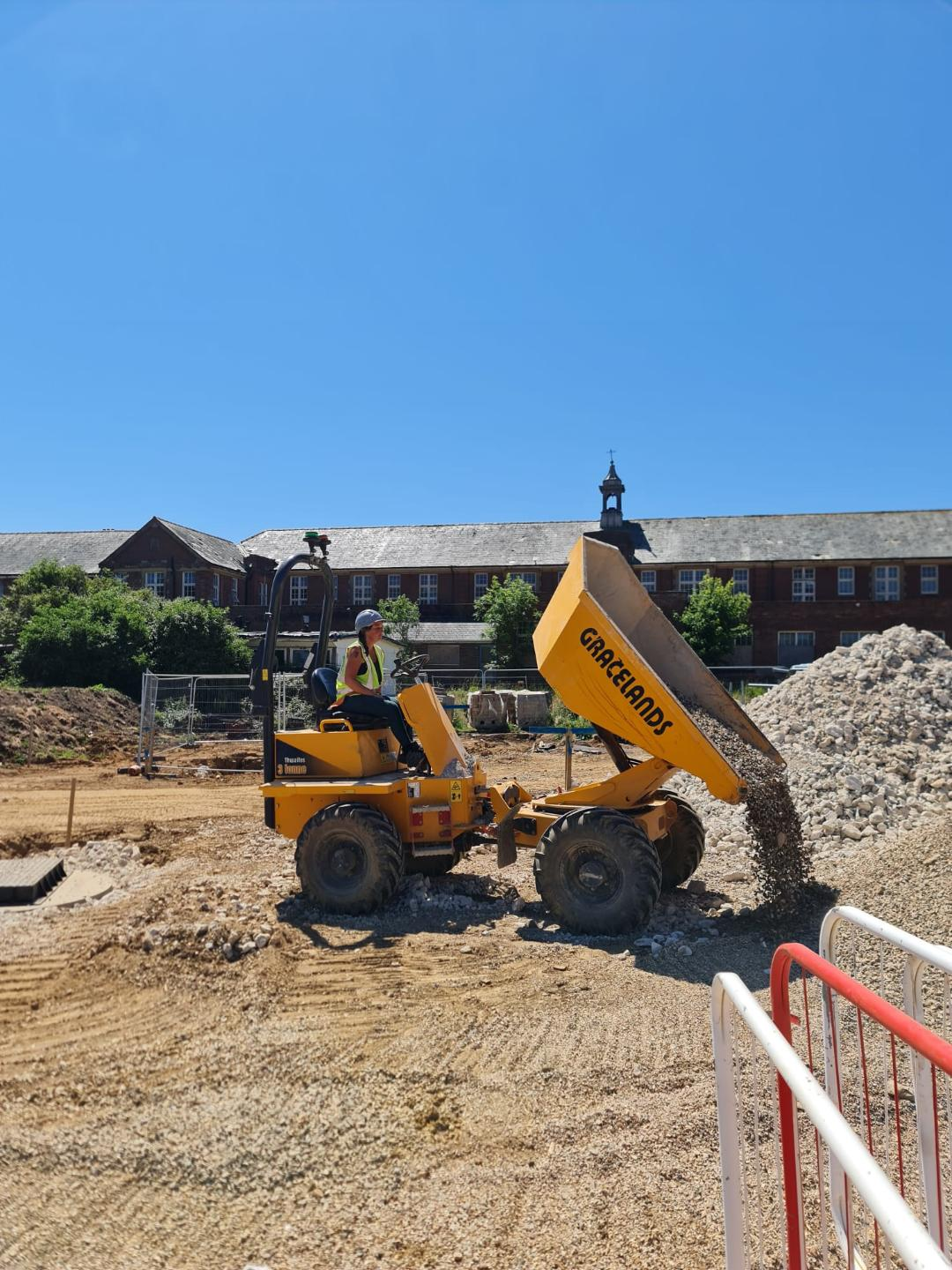
That's because novice training needs to establish the fundamentals before you can demonstrate the required level of competence.
A beginner may need to learn how to:
- Identify the machine's main components and controls
- Complete pre-operational and safety checks
- Start, stop and manoeuvre the machine correctly
- Understand the manufacturer's instructions
- Work safely around people, vehicles and other site hazards
- Use attachments correctly where applicable
- Carry out the machine's operating tasks safely
- Recognise the machine's limitations
- Complete end-of-shift and shutdown procedures
- Understand relevant health and safety responsibilities
There is also time needed to practise these skills. Knowing what a control does is one thing; being able to use it safely and consistently in a real working environment is another.
This is why a novice NPORS training course can take several days.
For example, KOPLANT lists five days for novice 360 Excavator training below 10 tonnes and three days for novice Forward Tipping Dumper training. Larger or more complex machinery can require longer training periods.
If you're completely new to plant operation, it's therefore better to think about NPORS training as learning a practical skill rather than simply obtaining a card.
How Long Does NPORS Training Take for Experienced Operators?
If you've already been operating a particular type of plant on site, your route can be significantly shorter.
Experienced operators don't necessarily need the same amount of foundation training as someone who has never used the machinery. Instead, the training and assessment can focus on confirming existing knowledge, addressing any gaps and making sure the operator can meet the required assessment standard.
For example, KOPLANT currently lists an experienced route of 7 hours for Forward Tipping Dumper training, compared with three days for a novice candidate. For the 360 Excavator below 10 tonnes, the experienced route is also listed as seven hours, compared with five days for a novice.
However, having experience doesn't automatically mean that every operator will complete training in the shortest possible time.
An experienced operator still needs to demonstrate the required knowledge and practical competence. If there are gaps in their understanding or their operating technique needs additional work, further training may be appropriate before the assessment.
This is particularly important because practical experience and formal competence are not always exactly the same thing.
You may be very comfortable operating a machine on your current site, for example, but still need to demonstrate specific checks, procedures or techniques required as part of the NPORS assessment.
What Happens During an NPORS Training Course?
The exact content depends on the machine category, but NPORS training generally combines theory with hands-on practical training.
At KOPLANT, courses can include classroom-based theory, practical exercises and assessment. The specific areas covered depend on the machine being trained.
Theory and machine knowledge
You need to understand the machine you're operating, not simply know how to move it.
Training can cover the machine's components, controls, capabilities, limitations, manufacturer's guidance and relevant safety requirements.
This knowledge is important because safe operation starts before the machine even moves.
Pre-use checks
Before operating plant, you need to know how to carry out the appropriate checks.
This can include checking the machine's condition, controls, safety equipment and other relevant components before work begins.
These checks help identify potential problems before they become a hazard.
Practical machine operation
This is where you'll spend time actually operating the plant.
Depending on the category, you may practise manoeuvring, excavation, loading, lifting, travelling over different terrain, positioning the machine, using attachments or carrying out other tasks associated with the equipment.
Safe working procedures
Plant doesn't operate in isolation.
Construction sites can involve workers on foot, other machinery, vehicles, excavations, overhead hazards and changing ground conditions. Training therefore needs to consider how the operator works safely within the wider site environment.
Assessment
The course finishes with the relevant theory and practical assessment.
The exact assessment requirements depend on the NPORS category. Successfully completing the required training and testing allows the candidate to progress to the appropriate NPORS registration or card route.
Does the Type of Machine Affect NPORS Training Duration?
Yes.
This is one of the biggest reasons you may see different NPORS course durations when researching training providers.
Operating a Forward Tipping Dumper is different from operating a 360 Excavator. A telescopic handler also involves its own operating procedures, load-handling considerations and safety requirements.
KOPLANT offers NPORS training across a range of categories, including excavators, dumpers, telescopic handlers, slinger/signaller and plant and vehicle marshal training. The duration differs between categories and between novice and experienced candidates.
For example, a novice Forward Tipping Dumper course at KOPLANT is listed as three days, while a novice 360 Excavator above 10 tonnes is listed at six to nine days.
That doesn't mean one machine is universally "harder" than another. It simply reflects the training requirements associated with each particular category.
What About the NPORS Card?
Completing the training and assessment is an important part of the process, but the type of card you receive can depend on the route you take and whether you have the required qualification.
For the NPORS/CSCS route, NPORS currently distinguishes between the Trained Operator Card and Competent Operator Card.
A new entrant without the relevant NVQ/SVQ can receive a Trained Operator Card, which is valid for two years. During that period, the operator is required to register for and achieve the relevant qualification.
Once the required NVQ/SVQ has been achieved, the operator can progress to the Competent Operator Card, which is valid for five years.
This is worth understanding before booking your NPORS training course, because completing the practical training is not necessarily the end of the qualification journey if you're following the NPORS/CSCS route as a new entrant.
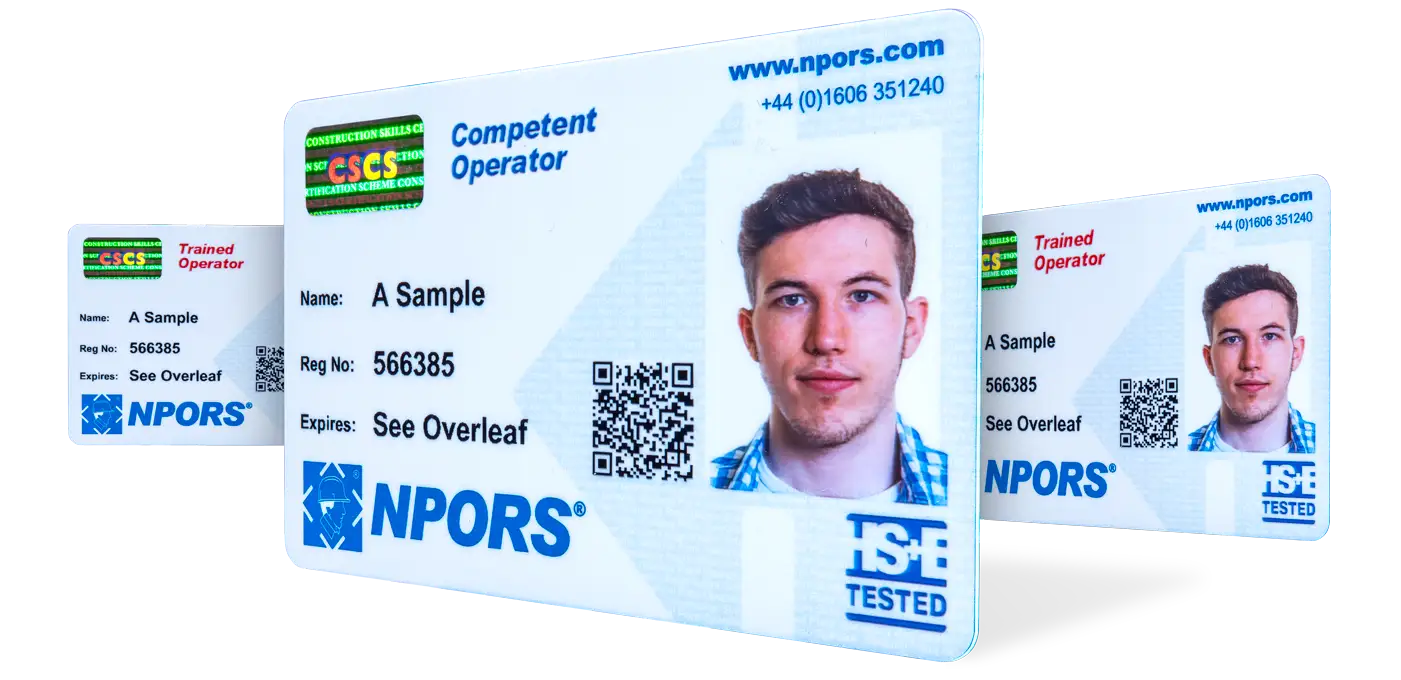
KOPLANT also explains this progression on its NPORS course information, including the requirement for relevant NVQ registration when applying for the NPORS/CSCS route.
Do You Need an NVQ to Get an NPORS Card?
It depends on the card route you're taking.
For the NPORS/CSCS construction route, the requirements differ between the Trained Operator and Competent Operator cards. A new entrant without the relevant NVQ/SVQ can initially follow the Trained Operator route, while the Competent Operator Card requires the relevant qualification.
This is why it's useful to establish which card you need before booking your training.
If your employer or a particular construction project requires a CSCS-logoed operator card, make sure you understand the relevant requirements before you start.
KOPLANT can also provide NVQ assessments, helping candidates work towards nationally recognised qualifications as part of their construction career progression.
Do You Need a CITB Health, Safety and Environment Test?
If you're applying for an NPORS/CSCS card, there are additional requirements to consider.
NPORS states that applicants for its CSCS cards need to have passed the relevant NPORS or CITB Health, Safety and Environment touchscreen test within the required period. KOPLANT also highlights the need for an in-date relevant CITB Health, Safety and Environment Touchscreen Test for its NPORS/CSCS courses.
It's therefore worth checking this before your course starts.
Having the correct prerequisites in place can help prevent delays and make sure you're ready to follow the correct card application route after successfully completing your training.
Can NPORS Training Be Completed Quickly?
It can be, particularly if you're an experienced operator and already have practical knowledge of the relevant machine.
But "quick" shouldn't mean rushing through the training.
The purpose of plant operator training is to make sure you understand how to operate the machinery safely and can demonstrate the required competence. If you're a beginner, taking the time to learn the fundamentals properly is more important than trying to finish as quickly as possible.
For experienced operators, a shorter route may be appropriate because much of the practical knowledge is already there.
The best approach is therefore to choose the training route that reflects your actual experience rather than simply looking for the shortest course available.
What Can Make NPORS Training Take Longer?
Several factors can affect how long your training takes.
Your previous experience is one of the most obvious. Someone who has operated the same machine regularly will have a different starting point from someone completely new to plant.
The machine category also matters. More complex machinery can require additional training and assessment time.
Your confidence and ability during practical exercises can also affect the amount of preparation you need. Training isn't about ticking off a fixed number of hours; it's about reaching the required standard.
Finally, the card route you're following can affect what happens after the course. If you're working towards an NPORS/CSCS Competent Operator Card, you may also need to complete the relevant NVQ/SVQ requirements.
Is NPORS Training Worth Planning Around Your Work Schedule?
For employers and operators, course duration can have a direct impact on work schedules.
Taking several days away from a construction project may require some planning, particularly when training multiple employees.
This is one reason it's useful to establish the correct training route before booking. If you have experienced operators, they may require a different course duration from new entrants.
KOPLANT provides training at its centres in Blandford, Dorset and Eastleigh, Hampshire, as well as offering contruction courses that can be delivered at your place of work. This gives employers options when planning training around their workforce and operations.
For businesses with several operators who need training, discussing your requirements with the training provider beforehand can help you understand the likely course duration and arrangements.
How Long Does It Take to Get Your NPORS Card After Training?
The training itself is only one part of the process.
Once you've successfully completed the relevant training and testing, the next steps depend on the NPORS registration or card route you're following.
For the NPORS/CSCS route, there are additional requirements around the relevant Health, Safety and Environment test and, depending on the card, the relevant NVQ/SVQ qualification.
This means it's useful to think beyond the question, "How many days is the course?"
A better question is:
What training route do I need, what assessment do I need to pass and what card or qualification do I need at the end?
Getting those details right at the beginning can make the whole process much more straightforward.
Choosing the Right NPORS Training Route
If you're completely new to a particular type of plant, a novice course is likely to involve more structured training and practical development.
If you've already built up substantial experience operating the machine, an experienced route may be more appropriate.
Not sure which route applies to you? Our FAQs page covers common questions on choosing the right course for your experience level.
NPORS training isn't simply a shortcut to obtaining an operator card. The aim is to make sure you can demonstrate the knowledge and practical skills expected of someone operating that particular category of plant.
Whether you're looking for NPORS excavator training, NPORS dumper training, telehandler training or another plant operator course, the exact requirements can vary.
At KOPLANT Construction Training, the team can discuss the relevant course with you and help identify the appropriate training route based on your experience and requirements.
The Bottom Line
So, how long does NPORS training take?
There isn't one answer.
A complete beginner may need several days of structured training, while an experienced operator may be able to complete a shorter experienced route. The machine itself also makes a difference.
At KOPLANT, current course durations range from shorter experienced-operator routes of around seven hours to several days for novice training, with some larger or more complex machinery requiring longer courses.
The important thing is not simply finding the fastest course. It's finding the right NPORS training route for your experience, machine category and career requirements.
If you're unsure which course you need, KOPLANT Construction Training offers a range of NPORS plant training options and can help you understand the requirements before you book.