You don't necessarily need to go back to college to gain a recognised construction qualification.
For many people already working in the industry, the most useful route is to have the skills they're using every day formally assessed in the workplace. That's where a construction NVQ comes in.
NVQs are work-based qualifications designed to demonstrate that someone can carry out a particular job role or set of responsibilities to the required standard. Rather than simply learning theory and sitting an exam, candidates build evidence from their actual work and are assessed against the requirements of the qualification.
That makes an NVQ particularly relevant to construction workers who already have practical experience but need a formal qualification to progress their career, meet industry requirements or work towards a particular card or competency level.
But what exactly is an NVQ in construction, who needs one and what actually happens during an NVQ assessment?
Let's break it down.
What Is an NVQ in Construction?
NVQ stands for National Vocational Qualification.
In construction, an NVQ is a work-based qualification that assesses whether you can demonstrate the skills, knowledge and competence required for a particular occupation or role.
That distinction is important.
An NVQ isn't simply a qualification where you spend months studying from a textbook before sitting one final exam. Much of the assessment is based around what you actually do at work.
For someone already working in construction, this can make an NVQ a practical way of turning existing experience into a recognised qualification.
KOPLANT offers NVQ assessments for people looking to achieve construction qualifications and progress within the industry. Its current training information covers qualifications from Level 2 through Level 6, depending on the candidate's role and career requirements.
Who Needs a Construction NVQ?
There isn't one single type of construction worker who needs an NVQ.
The right qualification depends on your role, experience, career plans and any requirements attached to the card or position you're working towards.
An NVQ can be particularly relevant if you're:
- An experienced construction worker who wants formal recognition of your skills
- Working towards a higher-level construction role
- Looking to progress from an entry-level position
- Working towards a supervisory or management position
- Looking to meet requirements associated with a construction card
- An employer wanting to formally develop the skills of your workforce
- An operator progressing through an NPORS or CPCS route where a relevant vocational qualification is required
For example, KOPLANT explains that NVQs can help construction workers progress towards relevant card requirements and career development. Its FAQ also describes NVQs as work-based awards designed to demonstrate competence in a particular role or sector.
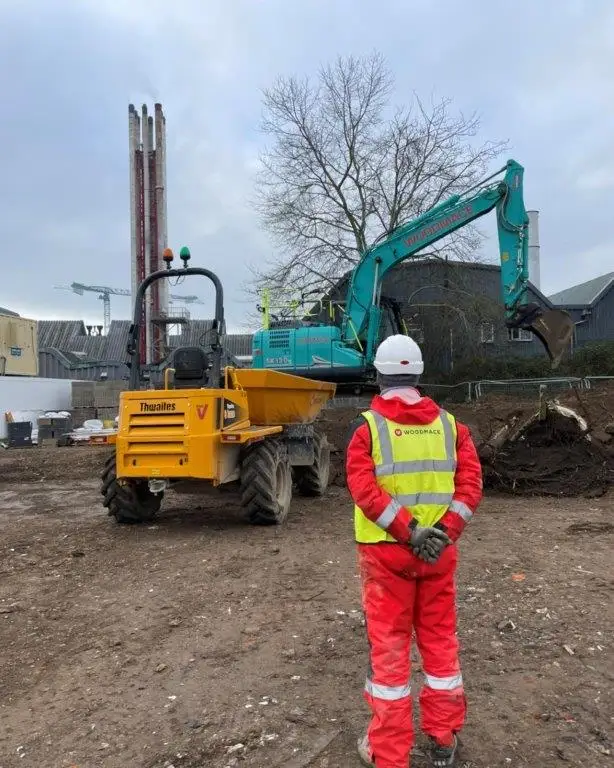
The important thing is that you don't necessarily need to start at the same level as someone with no experience.
Your existing skills and responsibilities can help determine which construction NVQ qualification is appropriate.
Do You Need an NVQ If You Already Have Years of Experience?
This is one of the biggest misconceptions about vocational qualifications.
Having years of construction experience doesn't automatically mean you already hold the formal qualification that an employer, project or card scheme may require.
You can be extremely experienced at your job and still benefit from having those skills formally assessed.
Think of it this way.
Your experience demonstrates that you've spent years doing the job. An NVQ provides a structured way to demonstrate that your skills and knowledge meet the requirements of a recognised qualification.
You don't necessarily need to start again and learn everything from scratch.
Instead, an assessor can look at what you already do in your role and identify the evidence required to meet the qualification's assessment criteria.
For experienced construction workers, this can make an NVQ assessment a much more practical route than taking a traditional classroom-based qualification that doesn't reflect their existing abilities.
What Are the Different NVQ Levels in Construction?
Construction NVQs are available at different levels, with the appropriate level depending on the occupation and responsibilities involved.
You may come across Level 2, Level 3, Level 4, Level 5 and Level 6 NVQs across different construction disciplines.
The level isn't simply a measurement of how many years you've worked in construction.
It relates to the complexity of the work, responsibilities and knowledge associated with the qualification.
For example, a Level 2 qualification may be appropriate for someone developing competence in a particular occupational role, while higher levels can relate to supervisory, management or more advanced responsibilities.
This is why choosing an NVQ based solely on the number attached to it isn't advisable.
The qualification needs to match what you actually do.
KOPLANT currently provides access to NVQ qualifications ranging from Level 2 to Level 6 through its construction training services.
How Does a Construction NVQ Assessment Work?
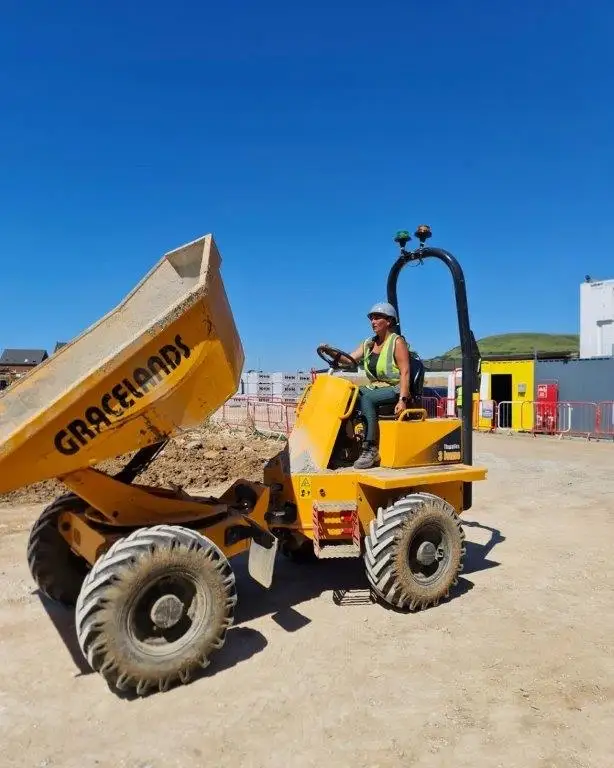
The assessment process can look different depending on the qualification, but the basic principle is straightforward.
You need to demonstrate that you can carry out the requirements of your job competently.
Instead of relying entirely on a written exam, an assessor gathers evidence showing that you have the skills and knowledge required by the qualification.
That evidence can come from your normal work activities.
This is what makes a construction NVQ assessment different from many traditional qualifications.
You're not simply being asked, "What would you do?"
You're often being assessed on your ability to demonstrate, explain and evidence what you actually do.
Step 1: Choose the Right NVQ
The first step is making sure you're working towards the right qualification.
This should reflect your actual job role and responsibilities.
For example, a construction worker carrying out practical site work will have different requirements from someone responsible for supervising a team.
A site supervisor will also have different responsibilities from a plant operator.
Choosing the right qualification at the beginning helps ensure that the evidence you collect is relevant to the assessment criteria.
This is one area where speaking to an experienced training provider can save time.
If you're unsure whether you need a Level 2 construction NVQ, Level 3, Level 4 or another qualification, the right provider can discuss your existing role and experience before you commit to a particular route.
Step 2: Initial Assessment and Induction
Once you've chosen the appropriate qualification, you'll normally go through an induction or initial assessment.
This gives the assessor an opportunity to understand your current experience and the requirements of the qualification.
You can discuss your role, the type of work you carry out and the evidence you may already have.
It also gives you an opportunity to understand what's expected from you.
This stage can help identify any gaps before you get too far into the process.
If you already have substantial experience, you may find that you are already producing much of the evidence required through your normal work.
Step 3: Gather Evidence From Your Work
This is where the work-based nature of an NVQ really becomes important.
Your assessor needs evidence that you can perform the tasks and responsibilities covered by the qualification.
That evidence can come from your day-to-day work.
Depending on the qualification, evidence may include things such as:
Workplace observations – An assessor may watch you carrying out relevant tasks in your normal working environment.
Photographs or videos – Visual evidence can sometimes help demonstrate completed work or practical activities.
Work documents – Relevant site records, plans, risk assessments, reports or other workplace documentation may contribute to your portfolio.
Professional discussions – You may need to explain why you carried out a task in a particular way, how you approached a problem or how you manage specific responsibilities.
Witness testimonies – Someone who has directly observed your work may be able to provide supporting evidence where appropriate.
The exact evidence requirements depend on the qualification.
The important point is that you aren't simply expected to produce a pile of paperwork for the sake of it.
The evidence needs to demonstrate that you meet the requirements of the qualification.
Step 4: Workplace Assessment
A key part of many construction NVQ assessments is observing you doing your actual job.
This might take place on a construction site or another appropriate workplace.
The assessor isn't simply checking whether you can complete one isolated task.
They need to determine whether you consistently demonstrate the competence required by the qualification.
That could include looking at how you plan work, use equipment, communicate with colleagues, follow health and safety procedures, manage risks, maintain quality and respond to problems.
For supervisory and management qualifications, the assessment may focus more heavily on areas such as planning, leadership, site logistics, resources, quality, risk and communication.
KOPLANT's Level 4 Diploma in Construction Site Supervision, for example, includes modules covering leadership and management, communication, environment and sustainability, planning and site logistics, quality, risk and cost, together with on-site assessment.
Step 5: Professional Discussion
Not everything can be demonstrated simply by watching someone work.
That's why professional discussion can be an important part of an NVQ assessment.
Your assessor may ask you questions about your work and the decisions you make.
For example, they may want to understand:
Why did you choose that particular method?
How did you identify the risks?
What would you do if something changed?
How do you check the quality of your work?
How do you communicate instructions to other people?
What procedures do you follow?
These questions aren't necessarily designed to catch you out.
They allow the assessor to understand the knowledge behind the practical work you're demonstrating.
Step 6: Fill Any Evidence Gaps
You may not have every piece of evidence required immediately.
That's normal.
During the assessment process, your assessor may identify areas where more evidence is needed.
Perhaps you haven't recently carried out a particular task, or there isn't enough documentation available to demonstrate a particular part of the qualification.
Rather than meaning you've failed, this generally gives you a clear indication of what needs to be covered next.
You can then work with your assessor to identify suitable opportunities to gather the remaining evidence.
This is another reason an NVQ is different from a single final exam.
The assessment is built around demonstrating competence across the qualification rather than relying on one test on one day.
Step 7: Complete the Qualification
Once all the required evidence has been gathered and the assessor is satisfied that you have met the relevant criteria, the qualification can be completed and submitted through the appropriate process.
The exact timescale varies considerably.
Some candidates may already have much of the required experience and evidence, while others may need more time to develop competence or gather evidence.
The length of an NVQ therefore shouldn't be judged purely by how long you have worked in construction.
It's about whether you can demonstrate the required competence for the particular qualification.
Is an NVQ the Same as a Construction Training Course?
Not exactly.
A training course generally focuses on teaching you specific knowledge or practical skills.
An NVQ focuses on assessing whether you can demonstrate competence in a particular occupational role.
Of course, there can be some overlap.
If an assessment identifies that you need additional knowledge or practical development, further training may be appropriate.
But the fundamental purpose is different.
This is why work-based assessment can be particularly useful for experienced construction workers.
You aren't necessarily being asked to stop working and spend months in a classroom.
Your normal workplace can become an important part of the assessment process.
Can an NVQ Help You Get a Blue Card?
For some construction workers, this is one of the most important reasons to understand NVQs.
The relevant qualification can form part of the route towards a competent operator card where the card scheme requires it.
For example, NPORS states that operators who hold the relevant NVQ or SVQ for their plant category can qualify for the NPORS/CSCS Competent Operator Card, subject to the other requirements. The card is valid for five years.
For operators who do not yet hold the required NVQ/SVQ, NPORS says the Trained Operator Card is valid for two years, during which time the operator is required to register for and achieve the relevant qualification. For more on how these card routes and course durations fit together, see our guide on how long NPORS training takes.
This is why an NVQ can be an important part of construction career progression for plant operators.
If you're following an NPORS/CSCS route, however, don't assume that any NVQ will automatically meet the requirement.
The qualification and relevant units need to match the category or categories you're applying for.
How Long Does a Construction NVQ Take?
There's no single answer.
The timescale depends on the qualification, your existing experience, the amount of evidence you already have and how frequently you can demonstrate the required tasks.
An experienced worker who is already performing all the relevant duties may have a different journey from someone taking on a new role.
Some qualifications can also involve structured modules and scheduled assessment visits.
For example, KOPLANT's current Level 4 Diploma in Construction Site Supervision includes six modules, an on-site assessment visit and a final on-site assessment, with the qualification described as taking approximately nine months to complete.
That's a useful illustration of why you shouldn't expect every construction NVQ qualification to follow the same timeline.
What Happens If You Don't Have Enough Evidence?
Don't panic.
Not having enough evidence at one point in the process doesn't automatically mean you're unsuitable for the qualification.
Your assessor can identify what's missing and help you understand what needs to be demonstrated.
The key is communication.
If you know that a particular task is part of your qualification but you don't currently have an opportunity to carry it out, tell your assessor.
They can help you plan how and when the appropriate evidence can be collected.
This is one of the advantages of a work-based qualification: the assessment can be connected to your actual job rather than being completely separate from it.
Why Do Construction Workers Choose an NVQ?
There isn't one reason.
For some people, it's about career progression.
For others, it's about formalising years of experience.
For plant operators, it can be part of progressing from a trained operator route towards a competent operator card where the relevant qualification is required.
For supervisors and managers, a higher-level qualification can provide formal recognition of responsibilities they're already carrying out.
An NVQ can also help employers demonstrate that members of their workforce have been assessed against recognised occupational standards.
The value therefore depends on your role and what you want to achieve next.
Choosing an NVQ Assessment Provider
Choosing the right provider matters because the process should reflect your actual role rather than create unnecessary work.
Before starting, make sure the provider can offer the qualification you need and understands the type of work you carry out.
It's also worth asking how the assessment will be delivered.
Will the assessor visit your workplace?
What evidence will you need to provide?
How often will assessment visits take place?
What happens if you need additional evidence?
What qualification level is appropriate for your role?
If you're working towards an NPORS or CPCS-related card, it's particularly important to confirm that the qualification and units match the requirements of the card route you're following.
KOPLANT provides NVQ assessments alongside NPORS, NRSWA, EUSR and other construction training services, allowing candidates to discuss their training and qualification requirements with a provider working across several areas of the construction industry.
The Bottom Line
An NVQ in construction isn't simply another classroom qualification.
It's a way of demonstrating that you can perform a particular role competently, using evidence from your actual work.
For experienced construction workers, that can make an NVQ a practical route to formal recognition without stepping away from the industry for a traditional full-time course.
The assessment normally involves identifying the right qualification, gathering workplace evidence, completing observations and discussions, and filling any evidence gaps before the qualification is completed.
If you're considering an NVQ in construction, the first step isn't necessarily signing up immediately.
It's understanding which qualification matches your role and what you need it for.
Whether you're looking to formalise existing experience, progress into supervision or management, or work towards a relevant operator card, getting the right qualification from the beginning can make the process much clearer.
KOPLANT Construction Training offers NVQ assessments alongside its wider construction training services. If you're unsure which level or qualification is appropriate for your role, speak to the team about your experience and what you're looking to achieve.